

Innovation From Experience
In agriculture, meaningful innovation doesn’t start with a slogan. It starts with listening, watching what happens in real working conditions, and staying close to the people who rely on our solutions season after season.
Over time, one pattern became clear in square baling operations: many conversations about “performance” were built around the well-known tensile strength and knot strength. Important, yes, but not the full picture of how twine actually performs in the field.
Why we had to rethink the problem
Baling isn’t a steady, controlled process. It’s dynamic, with many variable factors that occur from one day to another or one season to another. During bale formation and ejection, the twine surrounding the bale must retain its integrity while absorbing the repetitive impact forces created with each plunger stroke and upon ejection. These critical moments are short, but they are exactly where reliability is tested, and where real-world failures tend to happen.
Field data indicates that relying solely on tensile strength as a performance indicator can overlook the conditions that most often drive failure during critical phases of the baling process, specifically repetitive stress and the impact forces inherent to normal baler operation.
From Insight to Development
This shift in understanding became the starting point for a long developmental journey. Extensive field trials across different regions, crop conditions, and many different balers helped translate real challenges into clear developmental priorities. The goal was never to change for the sake of change, but to improve consistency, reduce downtime in the field, and support more reliable baling in everyday conditions.
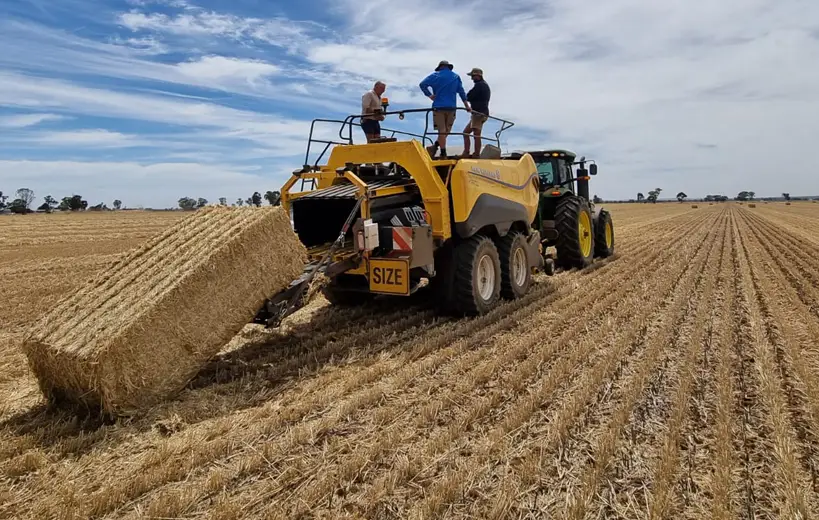
From here, IMPAX was born
A new way of thinking that reshaped the square baling experience. Today, farmers and contractors are able to produce more bales, more consistently, without unnecessary stops. The conversation in agriculture quietly shifted, from talking about tensile strength to understanding the energy absorption ability, from static forces to impact forces at work in the field.
The story of IMPAX is not just a story of technology. It reflects a broader mindset: continuous improvement rooted in field reality, long-term strategy, and a constant drive to challenge previously accepted assumptions. It’s the result of listening closely, learning continuously, and translating real-world experience into better, more reliable solutions, always with one clear goal in mind: making each day of baling easier and more dependable for farmers and contractors.